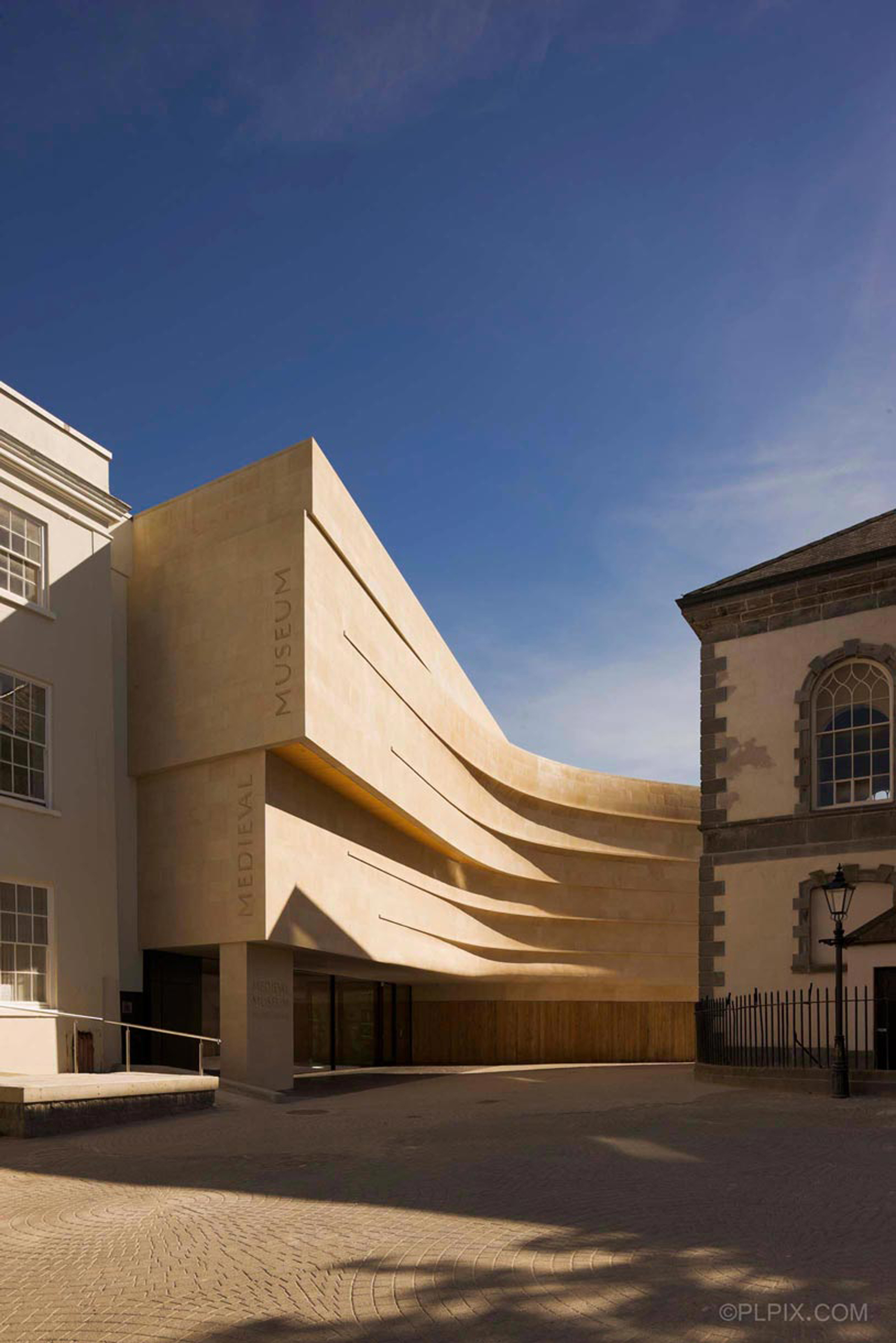
Really delighted to see that Waterford City Council Architects have won an International Civic Trust 2014 Award for this contemporary museum in my home city of Waterford. Hopefully this will set a precedent for similar developments in the Southeast region of Ireland.
http://www.archdaily.com/487908/medieval-museum-in-waterford-rojo-studio-architects/
The purpose of this blog is to document and follow my educational progression in the field of architecture. It was first set up in 2011 as a tool to share my experience on the MSc Architectural Technology and later on the Master of Architecture at NTU. The content and purpose has constantly evolved over the years and it is now a tool to assist my registration as an architect through the RIBA Studio Certificate. Paul Colfer, Bsc (Hons), MSc, M.Arch, PGCert
Thursday, 20 March 2014
Monday, 17 March 2014
Monday, 10 March 2014
SPUD Observatory Design Competition
On Monday 3rd March the observatory competition long list was released and our team consisting of myself, Joe Williams and Casey Williams were delighted to find our hard work and design process had paid off. We emerged through as one of the 20 teams to be long listed for the exhibition at Winchester Guild Hall where the projects were reviewed by a panel of 7. The judges included some high profile names such as Will Alsop and Bill Woodrow as well as five other distinguished professionals. The project was also mentioned on bdonline and the competition website that can be viewed in the links below:
http://www.lookinlookout.org/
http://www.bdonline.co.uk/longlist-announced-for-observatory-design-contest/5066963.article
Unfortunately the project was not chosen for the shortlist and the travelling exhibition but as a team our design exploration and research developed considerably over the 8 week period.
The conceptual approach to the studio was introduced in the post titled “Observation Theme Exploration” on the 30th January 2014. This was a diagrammatic image that portrayed our approach to observation and how its power can be enhanced through removing and then framing certain views. The team comprised a paragraph to support our theories and the image:
“The beauty of landscape and topography is somewhat elusive to those whom use it often and in a transient manner. Studio Obscura uses the power of denial to remove and distort views so as to render beautiful scenes that have become ordinary through frequent use”
In reality this is achieved by using vertical posts that stand in isolation and form a plane leading to the building. The posts eventually merge to create the density that is the actual enclosed space. Each post demands space in the landscape encouraging macro observation but the closer they become, the more the visitor views the micro aspects of the site. Once inside the building the visitor experiences a sheltered atmosphere away from the sun, wind and rain and is invited to observe the artist’s products and process.
Inside the intervention a counterpoint to the surrounding landscape is created through removing light from the tower and creating a pinhole camera obscura. This camera obscura projects the light and atmosphere of the artist’s studio above onto a translucent screen below. This is achieved using mirrors and varying ceiling heights to enhance the experience.
The image below is one of the central isometric drawings that show these vertical elements and their relationship with the building. The tower that encourages observation of the landscape from above and observation of the artist from below dominates the image.
Tuesday, 4 March 2014
NTU Architecture Exchange
NTU held an Architecture Exchange event last Thursday
evening which involved meeting various industry representatives and listening
to presentations on how to improve your employability within Architecture. I
was asked to speak about the preparation of the CV and portfolio and how to
maximise your skills developed at University. Once the presentations finished myself and two other architects from CPMG took part in a round table discussion on what we look for in graduates.
The link below explains a bit more about the event and main
points of all four presentations. The opening image of my presentation can be seen below and preformed as a foundation to my background and interests.
Subscribe to:
Posts (Atom)


