The purpose of this blog is to document and follow my educational progression in the field of architecture. It was first set up in 2011 as a tool to share my experience on the MSc Architectural Technology and later on the Master of Architecture at NTU. The content and purpose has constantly evolved over the years and it is now a tool to assist my registration as an architect through the RIBA Studio Certificate.
Paul Colfer, Bsc (Hons), MSc, M.Arch, PGCert
After a truly
intense and inspirational trip to Denmark
and Sweden
the design thesis work is back on track and many precedent studies have been acquired
throughout the trip. A small selection of photos taken can be seen below but
the rest are currently in the process of being edited for a booklet that
compliments the trip.
The boundaries of Boston have been continuously transforming throughout history and these physical changes are directly related to the social and economic demographics of the region. The image below maps out the position of the coastline and the series of islands that were located around Boston during Roman times. A record of human history is held in the sands around these islands but the constantly changing silt levels makes it difficult to recover any of these artifacts before they are once more covered. The peat like ground found within the estuary is known to contain various wrecks and Neolithic, Bronze Age, Iron Age and Roman settlements.
From the 12th century Boston was a key trading point for the Hanseatic League who were a trading alliance from Germany. This led to the area of the Wash becoming known as the large arm of the German sea. It was the change of boundaries as a result of the river Witham becoming too shallow that led to the demise of Boston as a medieval port. Wreckage's and artifacts from this trading period are know to lay in the Witham and with the new boundaries to be created by new tidal defenses they will be accessible for the first time.
The boundary change will have a significant effect on the amount of waterways accessible to leisure activities. The movement of the commercial sector to beyond the existing port will give new deep water access but also greater opportunity to explore the waterways. The more land that is reclaimed the more segregation there has been between local people and eastern European immigrants in the last decade. This raises the question as to whether or not an architectural intervention could become a interchange for social exchange and integration within this new boundary as well as all the other practical needs mentioned.
This is the first of a series of collages that will be produced in order to find a suitable site to explore the theme of absence outlined in the previous post.
Today was spent reading Peter Zumthor’s "Thinking Architecture" and John Pawson's "Themes and Projects" to help my design thesis exploration of concepts. I have always had huge admiration for Zumthor and after reading Thinking Architecture this respect has been strengthened. The clear language used to explain his personal complex understanding of buildings and materials is immensely enjoyable and it is evident how he has become such a prolific architect.
I have decided to adopt some of the ideals mentioned by Zumthor in this book when designing any of the built elements required for the thesis. He mentions that all of his architecture should strive to simply exist but virtually impossible to imagine a place without it. The investigation of possible themes that could emerge from potential sites in Boston, Lincolnshire will be articulated in this text. There are a number of sites in the town centre that are calling for an intervention to draw the place back to the coast. What I find interesting about Boston is the strange sight of deep hulled fishing boats dominating a town that could be misunderstood as an inland river. From reading Thinking Architecture these boats become beautiful because they have been placed in an area that seems to be out of context and missing something. "The more we miss something the more beautiful may become that which we have to mobilize in order to endure absence" (Zumthor, 2007).
Location of Boston UK
I find this idea of absence intriguing and it is a secret passion that will be brought into this project. This theme is something I deal with most days when living in Nottingham which is quite far away from the sea. Simple waterways and their adjacent buildings are rendered beautiful in my mind through intense feelings of absence from the coast. The river Witham through Boston accommodates roads and buildings with names such as Fishermans Court, Custom House Quay, and Doughty Quay e.c.t. These names suggest a place that is struggling to come to terms with absence from its main lifeline so like my personal experience in Nottingham, anything that is used to endure this absence emanates a powerful and beautiful presence.
The sea area forecast that is played on VHF channel 23 and 84 is a sound that immediately changes how I feel in a particular place. Memories of being in a sailing club or the lifeboat station with my father when the broadcast starts and immediate attention is demanded by everybody present in the room. Anybody who comes from a coastal background will have a connection with the soothing sound of the broadcaster’s voice. Boston and its people have such a strong relationship with the sea so by introducing sounds, emotions and volumes that are usually absent we can make truly powerful spaces. After an immensely busy day in the studio I usually listen to Radio 4 and the shipping forecast which introduces the coast and tranquillity to my landlocked Nottingham kitchen.
A song that has been produced by a band called Overseer also recognises this feeling I have towards the weather. The protagonist speaks as a VHF broadcaster and links the sea area forecast to his feelings of solitude and emotional changes relating to the weather.Overall I think that the power of absence and the introduction of missing elements will be an interesting design thesis theme. The proposal of using objects that one would initially perceive to be out of context to render the areas of space beautiful hugely inspires me.
The image below is of lobster pots in my hometown of Dunmore East which are quite fitting in their harbour surrounds but how would these sit in Boston? I would be very interested to hear feedback on this proposal and ideas presented in this post so if you have any thoughts please leave a comment below.
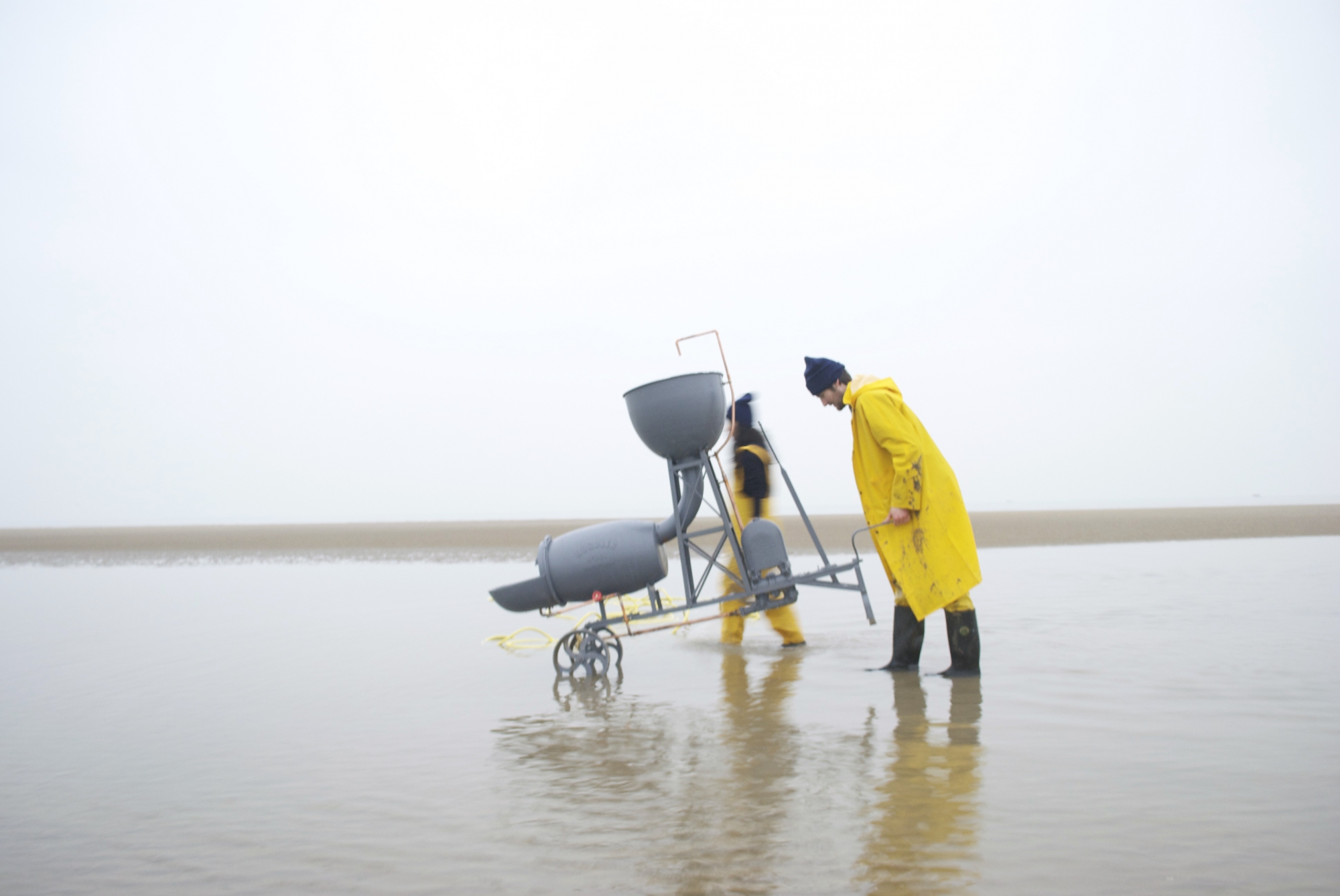
As I mentioned briefly in the previous post the idea of recovering materials created by man from the sea and doing something creative with those materials is something I find very appealing. The sea chair created by studio swine should be created at a larger scale and is something that may be integrated into my Design Thesis. The images below were produced by Studio Swine and show the materials and furnace used to create the chair. The severity of damage caused by plastic in the sea is continuously increasing with the current figure of 46,000 pieces of plastic per square kilometer set to double in the next 10 years.


.jpg)